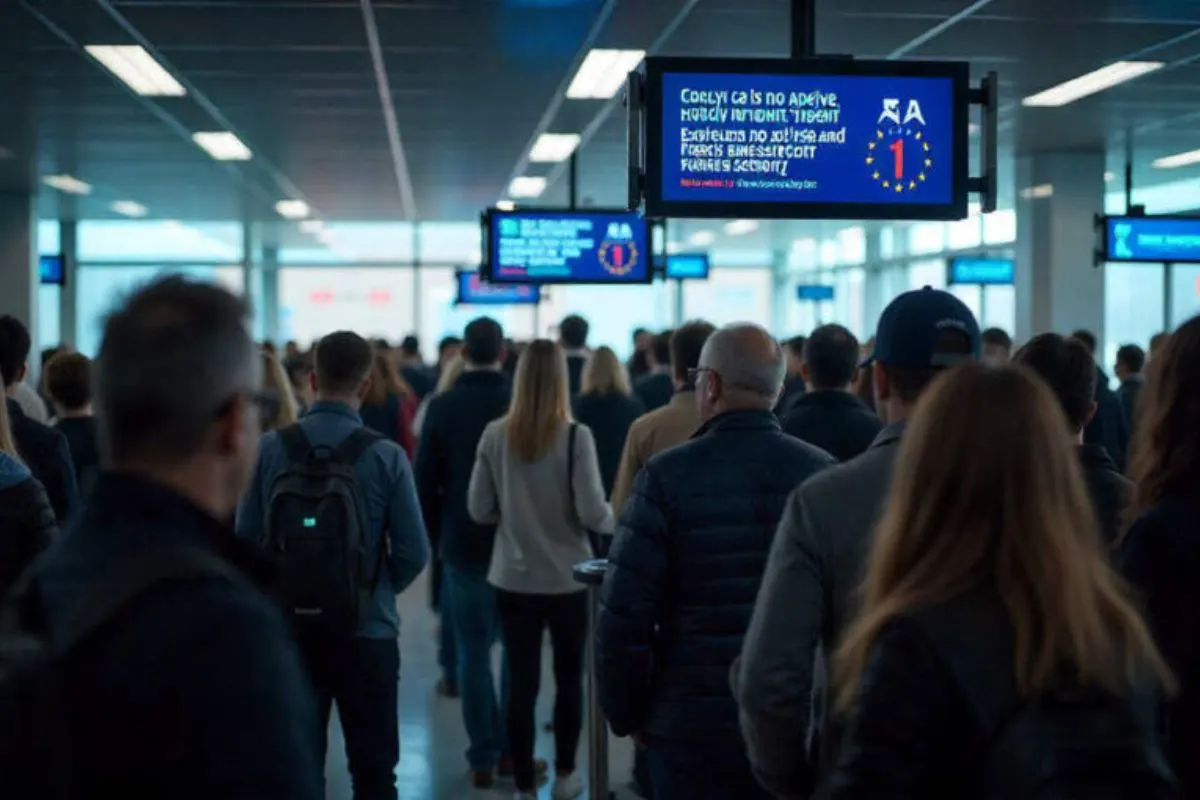
Paris, October 16, 2025 – France joins Spain, Italy, and Greece as these European nations prepare for the rollout of the new EU Entry/Exit System. This system replaces manual passport stamping with biometric data collection for non-EU travelers. Airlines such as Air France, Vueling, and EasyJet brace for the changes as tourist arrivals may be impacted. The EU Entry/Exit System is part of a broader effort to modernize European border management.
New EU Entry/Exit System Details
The EU Entry/Exit System rollout started on October 12, 2025, gradually taking effect across Schengen countries, including France, Spain, Italy, and Greece. This system collects biometric information such as fingerprints and facial images. Non-EU nationals will have these recorded upon entry and exit. The system aims to replace the current manual passport stamping process, improving efficiency and security.
France joins Spain, Italy, and Greece in adapting their border control infrastructure to support this new system. The automated process challenges airlines like Air France, Vueling, and EasyJet to prepare for possible operational impacts. Passengers may face longer wait times while biometric data is being registered. The full implementation is expected by April 10, 2026, after a gradual rollout of EU Entry/Exit System over six months.
Impact on Airlines and Tourists
Airlines, including Air France, Vueling, and EasyJet, which have busy routes to France, Spain, Italy, and Greece, are preparing for potential delays. France joins Spain, Italy, and Greece in handling increased processing times at border controls. Passengers traveling to these countries could experience extended waiting periods at airports. This may affect tourist arrivals, especially during peak travel seasons.

The EU Entry/Exit System helps detect overstayers and identity fraud, enhancing border security for participating countries like France, Spain, Italy, and Greece. However, businesses and travelers are advised to anticipate some initial disruption. Airlines are working closely with border authorities to manage passenger flow efficiently.
Travel Tips for Tourists Navigating the New EES
- Arrive early at airports to allow extra time for the new biometric entry and exit checks.
- Follow instructions from border staff carefully to speed up the registration process.
- Be prepared to have fingerprints and facial images taken during your first EU Entry/Exit System from the Schengen area.
- Use available self-service kiosks or mobile app pre-registration to reduce wait times where possible.
- Keep your travel documents handy, as officials will verify passport details along with biometric data.
- Remember that the system registers your entries and exits electronically, replacing passport stamps.
- Understand that the maximum stay remains 90 days within any 180-day period in the Schengen area.
- If returning within the same period, previous stays count towards the total allowed days.
- Be patient during the initial rollout phase of the EU Entry/Exit System, as longer waiting times may occur initially.
Final Words
France joins Spain, Italy, and Greece as key countries adapting to the EU Entry/Exit System rollout from October 2025. Airlines such as Air France, Vueling, and EasyJet prepare for the impact on tourist arrivals. The new biometric system is set to modernize travel checks and secure borders while balancing traveler convenience. The gradual rollout will continue until full operation in April 2026, marking a major change in how Europe controls its external borders.
Read More: Juan del Val Wins 2025 Planeta Prize for His Romantic Novel ‘Vera, una historia de amor’