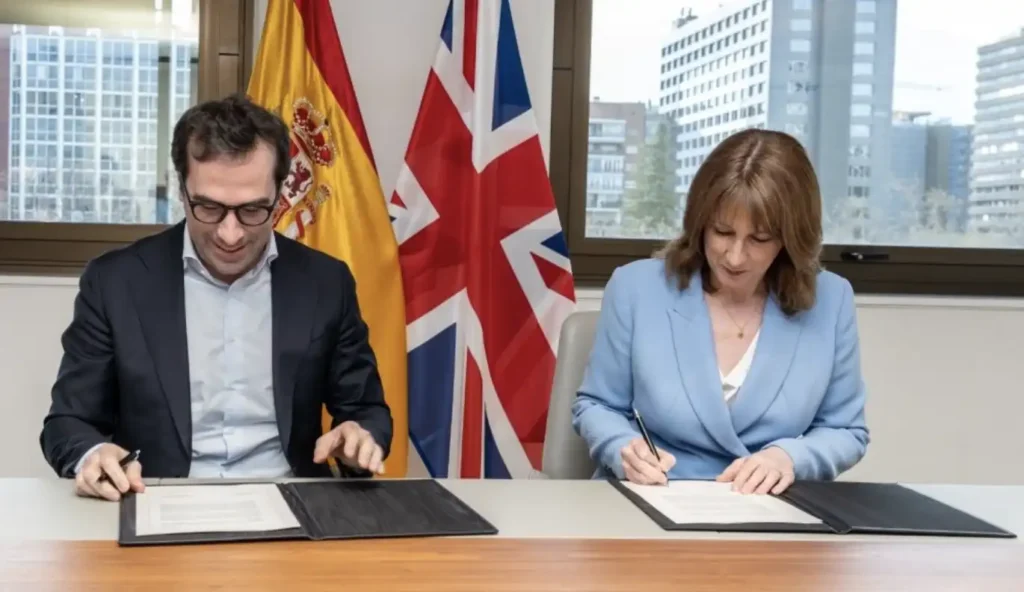
UK Chancellor Rachel Reeves flew to Madrid to sign a landmark agreement that could make it easier for professionals from both countries to work across borders — a sign that Britain is slowly rebuilding bridges with Europe
For years since Brexit, British professionals heading to Spain for work have had to deal with mountains of paperwork, visa rules, and red tape that simply did not exist before. That frustration may soon ease, thanks to a new deal quietly signed in Madrid this March.
UK Chancellor Rachel Reeves visited the Spanish capital and sat down with Spain’s Economy Minister Carlos Cuerpo to sign a joint declaration aimed at making cross-border business travel smoother. The centrepiece of the agreement is a short-stay work visa waiver — a scheme that would allow professionals from both countries to travel and work for up to 90 days without needing a full work visa.
Who Benefits and By How Much?
The waiver is not aimed at everyone. It targets specific professional sectors — lawyers, financial advisers, IT specialists, consultants, and corporate services workers. And it works both ways, meaning Spanish professionals heading to the UK would get the same treatment as their British counterparts going the other way.
The UK Treasury estimates the visa deal alone could add around £250 million in extra exports for British businesses over five years. That is a meaningful number, especially for a country that relies heavily on services trade. Beyond the visa waiver, the two governments also agreed to work towards greater recognition of professional qualifications — so a British-trained accountant, for example, would find it easier to have their credentials accepted in Spain.
Reeves also used the visit to meet roughly 120 Spanish businesses and investors in the city, coinciding with a £240 million investment linked to Spanish liquid storage firm Exolum.
A Clear Political Signal
The trip is about more than just paperwork. It is part of a wider effort by Prime Minister Keir Starmer’s government to quietly rebuild economic relationships with European neighbours that were damaged — or at least made far more complicated — by Brexit.
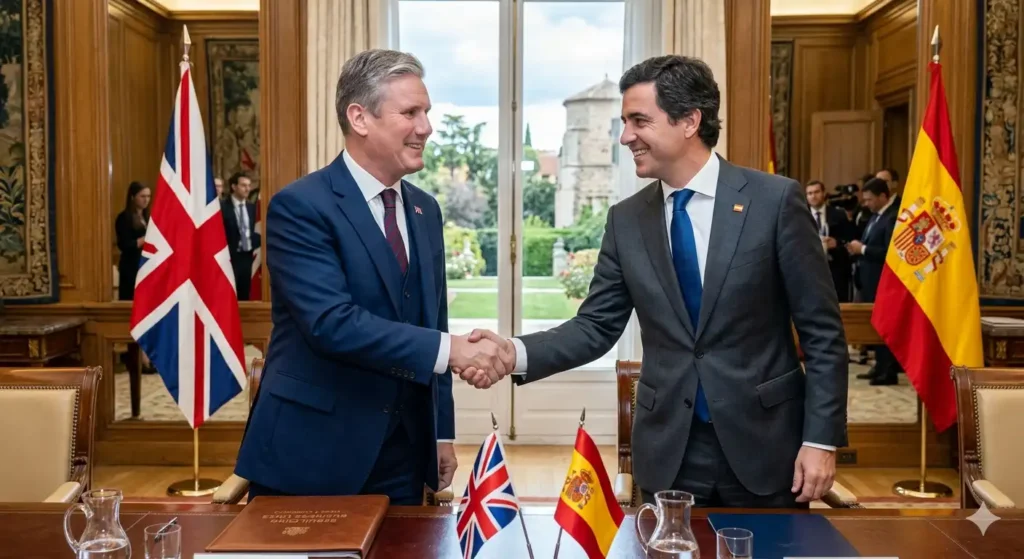
Reeves did not shy away from saying so directly. “In an uncertain world, we must build growth that is secure and resilient,” she said during the visit. “We count Spain amongst those partners — and the prize for doing more together is considerable.”
Cuerpo matched the tone on the Spanish side, saying: “No country can face the challenges of this era alone. The United Kingdom is, and will remain, one of Spain’s most important partners.”
Notably, it was Spain that first put forward the idea of a mutual visa waiver as a practical way around post-Brexit barriers. Madrid has been pushing for closer ties even as broader EU-UK negotiations have moved slowly.
Trade Is Already Growing
The timing makes sense. Spanish exports of goods to the UK hit €24.9 billion in 2025, up more than 25% compared to pre-pandemic figures. British exports to Spain have also grown sharply, reaching £22.1 billion — an 11% rise in a single year, making Spain one of the fastest-growing markets for UK goods and services.
The two countries signed a broader Strategic Framework last September, covering cooperation in technology, defence and life sciences. Wednesday’s agreement builds on that foundation — small in scale, but significant in what it says about where the relationship is heading